
The MS-Archive is my magnum opus, my life’s work, and ultimately my main contribution to humanity. So… what exactly is it?
What is the MS-Archive?
The MS-Archive is a hierarchically structured database (a single OneNote document + complentary data), containing:
- 7+ yrs daily journal nonstop since age 15 (+ post facto from birth to 15)
- Psychometrics (200+ validated self-report psychometrics repeated every 1-2yrs)
- Images, video, audio (timestamped and connected to journal entries)
- Clinical diagnostics and health data (e.g., medical visit data, Omakanta)
- Weekly biological markers + daily medicine consumption (8-electrode-scale measured stats, weight, etc, blood pressure and pulse, exact daily mg/ml tracking of medicine, caffeine, ethanol, etc.)
- Daily quantitative self-report mood/state scales (valence, stress, vitality, motivation, awareness, pain, social connectedness)
- Daily qualitative self-report mood/physical state (how I felt that day, physically & mentally, with the physical section having unmatched granularity, e.g., exact teeth mentioned if I have a toothache, the location of pimples, etc.)
- Long-form analytic/reflective essays (2019–>) to analyze and compare worldview drift.
- All significant information I have ever learned (7th grade–>uni + free time)
- Insights (personal, scientific, metaphysical insights and pet theories)
- Physiological data (Oura ring exports, sleep data, pulse, physical activity, etc.)
- Creative projects (my creative fiction project with TWS, drawings, animation, YouTube, etc.)
- Finances (every cent in and out, timestamped & coded, plus tax data)
- Automatically backed-up digital data (e.g., Google’s everything; location data, emails, messaging, and more).
- Activitywatch (exact timestamped behavioral markers for what I do on my phone, pc, laptop)
- MyFitnessPal daily data (exactly what I eat, drink, and when, product codes scanned and meals measured)
- And plenty more (e.g., habit tracking, 900+h of meditation, exact physical activity/workouts tracked, dream journal, n=2+ data from partners and family members’ consented journals and data beside my own, video and audio recordings, etc)
With plans to expand to containing my full genome (30× WGS) in research-grade 99.9% accuracy, my metagenome (gut microbiome), and my connectome if I live long enough to make it possible non-invasively.
I am also currently working on getting HESS (Home Environment Sensor Station; my custom Raspberry Pi sensor station, with around two dozen sensors) to add second-scale environmental tracking to the database (e.g., CO2, formaldehyde, Nitrogen, light/Lux, sound/dB levels).
All of this, within a scientifically viable framework, a two-step embargo procedure (redacted release when I’m around 80 years old, full unredacted release 100 years following my death), detailing post-mortem guidelines (confidant obligations/power), pre-release operations (redacting copyrighted material & PII), M-disc backups for true long-term digital storage, usage rights, ethics guidelines, everything to make the data as scientifically (and culturally/historically) viable and usable according to GDPR guidelines.
To summarize the legal mumbo jumbo, here’s the basis:
- For personal data (daily logs, finances etc): GDPR Article 6(1)(a) (Consent), and/or Art. 6(1)(f) Legitimate Interest, and for more sensitive personal data (e.g., physiological), GDPR Article 9(2)(a) (Explicit Consent)
- For other people’s data and mentions of others: GDPR Article 85 (Freedom of Expression & Literary Processing), and GDPR Article 6(1)(f) (Legitimate Interests)
- For scientific and archival processing: GDPR Article 89(1) (Archival/Research Safeguards) and Tietosuojalaki 1050/2018 (Sections 6–7 & 31), obviously including the “reasonable safeguards” such as pseudonymization/anonymization (e.g., blurring pictures, names changed, PII removed), access control and harm reduction
It is, to my knowledge, the most comprehensive database of a single human in recorded history (facet-wise, approaching length-wise as well), with plans to continue expanding, refining, and collecting data until my death, creating a true birth-to-death database, portraying a full raw/unfiltered human existence in the 21st century.
What does it contain?
Here’s an overview of the main sections in the MS-Archive.
Daily Journal (2003-present)
The largest and most important part of the MS-Archive is my daily journal, containing my description and reflection on what happens each day, complemented by various quantitative and qualitative measurements (self-report measures, both verbal/numerical data, psychometric & diagnostic data, physiological data etc.). Since I began at the age of 15 in December 2018, I have not missed a single day.
It contains both qualitative (text entries) and quantitative data from various measurements: sleep, exercise, nutrition, happiness, clinical personality tests, and a whole lot more, from every… single… day…
I have even post facto added everything I could possibly remember from the year I was born, all the way to the day I started daily journaling (using paper/digital records and my parents recollection for cross-validity) when I was 15, as well as information about my parents, their parents, and even their parents, encompassing not just my life, but also my genetic and social ancestry.
Additionally, the journal also contains pictures and videos connected to the journal entries, interlinked like a big Wikipedia system, everything timestamped.
Information, insights, reflection
Another massive chunk of the MS-Archive is all the important information I have ever learned.
It contains everything important I have ever learned, starting from middle school, to every single course I’ve taken in gymnasium (high school/college) to uni and beyond.
It contains notes from every book I’ve read, every course I’ve taken, every important video, every insight I’ve had; All of it.

Creativity
The third largest chunk of the journal is my creativity section, containing any and all creative texts I’ve written, from my fantasy book series – The World Stones, to the Book of Opinions, detailing the evolution of my opinions on a variety of subjects. It contains my whole DnD notes and campaigns I run as a DM. It contains any and all drawings I’ve made, from childhood to adulthood. It contains my YouTube video planning/scripts, animation, and a hell of a lot more.
Along with the World Stones book series, the Book of Opinions is the most fascinating part of my creativity section. At tri-yearly intervals, I write my opinions on a variety of subjects, for example, already predicting the AI explosion back in 2019, at the age of 16.
Complementary data
The fourth largest chunk of the MS-Archive, and likely one of the most important when it comes to scientific usability, is the horde of complementary data too large to functionally have within OneNote.
It contains all the physiological data tracked every day from my Oura Ring, all the important Google data (location data, emails, search history, etc.), my daily messaging (WhatsApp), and a ton more viable data (e.g., all ChatGPT chats, videos I’ve uploaded to my YouTube).
It contains ALL pictures, videos, documents from birth –> present, not just the most important ones I upload to my OneNote.
All this data could one day be used to make a near-perfect reconstruction of me, producing an AI that would talk and sound exactly like me, and know every piece of information I myself do. Maybe not the most scientifically viable, but sure as hell interesting.
The planned genome sequencing (and even tracking epigenetic changes) would be absolute gold for research. You could separate nature from nurture, analyze ADHD-related risk genes, and generate thousands of research questions, using the same material again and again once behavioral genetics and research methods evolve!
Purpose & Goal
My Goal & Purpose
I started the MS-Archive as a simple self-improvement related Commonplacebook back in 2018, not yet realizing the sheer value of what I was producing. Only now in 2025 have I realized what I have on my hands.
What sets my journal apart is the sheer depth and scope. I am actively writing in a way to clarify things that are self-evident to me today, trying to avoid the famous “three seasoning problem” from history (where self-evident details are left out). I am actively refining the journal, adding sections and measurements which I believe would be most viable for future research, as well as what would be the most interesting to others, all to make the MS-Archive as useful as it can possibly be.
I plan to continue writing, expanding, tracking, and refining the MS-Archive until the day I die, so that it would turn into the only fully complete record of a human life, from my birth in 2003 to my death, capturing as many data points and facets of life as I can possibly cram into it, all for the betterment of mankind when I am long gone, rotting six feet under.
Comparison to Other Works
Other works
The currently longest/most comprehensive journal in human history is Robert Shields’ 25-year-long journal, where he wrote simple text entries every five minutes, producing an unmatched moment-to-moment resolution.
BUT, Shields never tracked any other data: no personality tests, no meticulous and structured self-report measures, no health data, no genetics, none of the information he learned, no images and videos, no serious reflection and analysis, no creative projects, and all just a wall of text (on paper with a typewriter no less) with no intuitive hierarchical structure. He did it from the age of 51-71, entirely excluding early adulthood and childhood development.
Then there’s Gordon Bell with his MyLifeBits project, logging emails, web activity, biometrics, photos, audio, and documents for 17 years straight. He had unmatched passive breadth, but…
Gordon entirely lacked any journal-style data, self-report data, reflective or creative texts, and all his data was in dispersed streams instead of all in one cohesive hierarchical and intuitive database. And again, he started during retirement age (age 65), and tracked everything with early 2000s tech.
Why the MS-Archive is different
My purpose, what makes my archive unique, is precisely because I expand on what Robert Shield and Gordon Bell lacked. I started daily journaling and tracking at the age of 15, capturing nearly my entire teenage development, and even post facto added 2003-2018, cross-referencing my own memory, physical records, and my parents’ recollection for cross-validation.
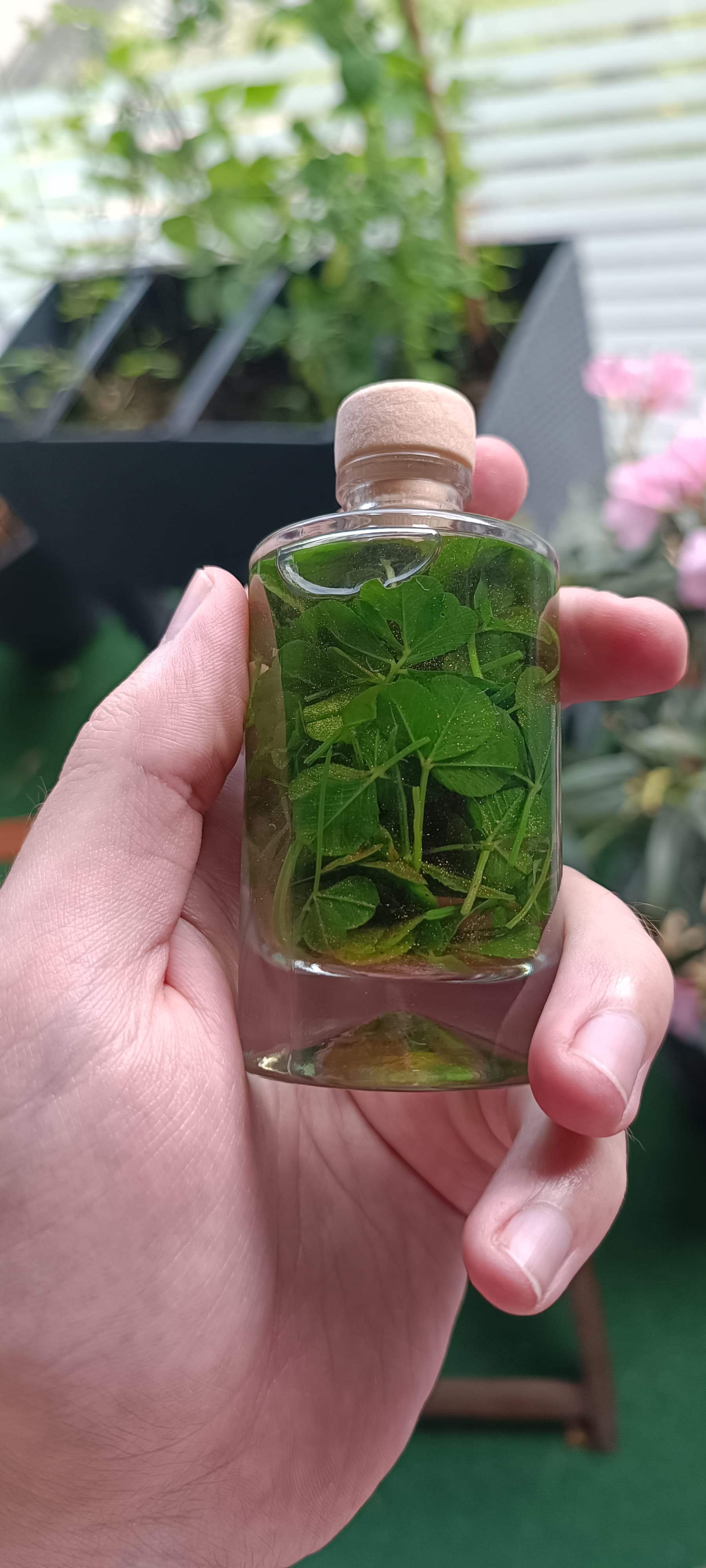
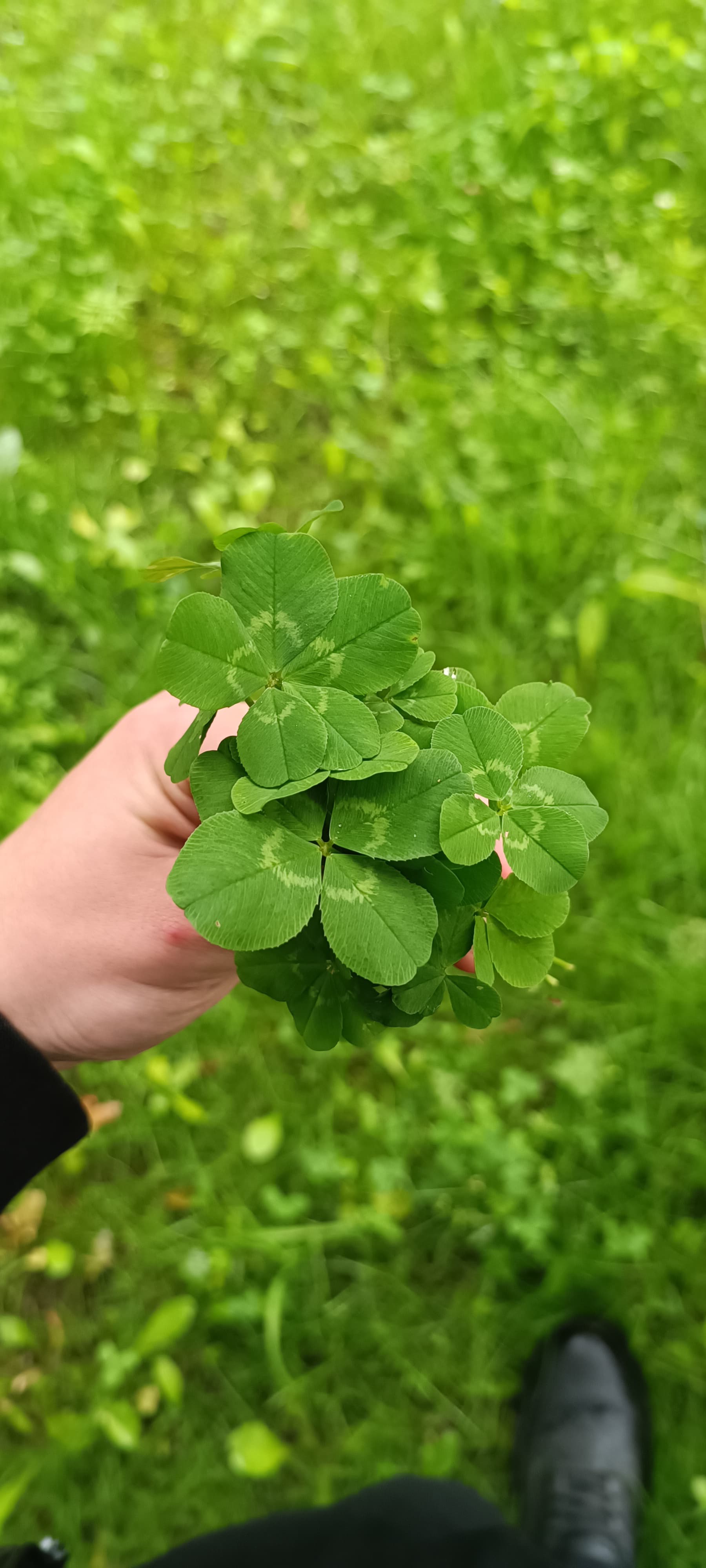
Additionally, I live and track the most interesting period of human existence to date, the shortest span of time with the most amount of change. I’ve lived through having no phones at home, no internet, to living through the immense tech explosion and the advent of Artificial Intelligence. Plus, not to boast, but my life is extraordinarily interesting; to illustrate that, here’s a “Luck Potion” I made using 52 four-leaf clovers, 4 five-leafs, 6 six-leafs, some gin, and edible glitter.
Academic justification
If you’re looking for the academic justification for this project, please refer to my essay on the Hypothesis Generation Machine, an algorithmic methodology for generating candidate hypotheses in a more formalized manner than contemporary science, by utilizing dense, multimodal idiographic N=1 databases and machine learning technologies.
This is one of the primary functions of the MS-Archive, to serve as the database powering a modern (or future) artificial intelligence methodology, a way to map out the hypothesis space that traditional nomothetic group research and limited human cognition may leave out.
Conclusion
The sheer magnitude of quantitative and qualitative data that the Archive contains (and will contain) is something that I wish one day would be used in academic research to further the understanding we have of individual human development, cognition, and experience, from birth till death.
Ultimately, the MS-Archive is a testament that speaks for the totality of the human experience, in a sense, it is a painting of human existence. That is, the MS-Archive.
The Archive itself (or whatever I can legally share as of now)

